

How Points Travelers Book Flights: 9 Secrets That Unlock Better Trips
For a long time I thought flights were just expensive.
No matter when we traveled or how early we booked, the options always seemed the same. Economy flights across the Atlantic were usually around $1,000 or more, and business class prices made them completely out of reach.
So we did what most people do.
We planned one big trip each year, saved up, and made it work.
Now we take several trips a year and spend about the same amount we used to spend on that one trip.
Two things changed that completely reshaped how we plan trips.
I started earning flexible credit card rewards points.
And I realized there was a better way to search for flights.
A quick note about my home airport: My home airport is RDU (Raleigh-Durham in North Carolina). It’s not a massive international hub, so for a long time I assumed that meant our flight options would always be limited.
But once I started learning how people actually book flights with points, something surprising happened.
Flights started appearing that I had never even seen before.
Different routes.
Different airlines.
Sometimes even better itineraries than the ones I originally planned.
That’s when I realized something important. People who book flights with points aren’t just redeeming rewards.
They’re approaching the search differently from the start.
Why people learn how to book flights with points
At first glance, searching flights this way can look like extra work.
Why not just open Google Flights and book whatever appears?
The real reason people learn this system is points. Most people start learning this system for one of two reasons:
Points can make flights cheaper, which means many travelers start taking more trips each year.
Or they use points for elevated flights, like long-haul business class, that they would never normally pay cash for.
Either way, the points are what make it possible.
But to use them well, you also have to learn a slightly different way to search for flights.
And once you learn that system, some of the same strategies can even help when you’re paying cash for flights too.
Why Points Travelers Find Better Flights
Most travelers search like this:
Home airport → Destination → Roundtrip flight → Pick the cheapest option
Points travelers search like this:
Find the best long International flight → Build the trip around it → Add positioning flights if needed
Secret 1: Why points travelers build trips backwards
Most travelers start with the destination.
Points travelers often start by finding the longest flight between home and the destination, then build the rest of the trip around it.
Instead of searching:
RDU → Rome (there are zero direct flight options)
I might start by looking for flights across the Atlantic and see which routes have good award availability.
Once that long flight is solved, the rest of the trip becomes much easier to arrange. Let’s be honest. The longest flight is where comfort matters most.
Sometimes that flight lands exactly where I planned. Other times it lands somewhere nearby that turns out to work even better. That’s exactly what happened when we planned a trip to Italy.
This doesn’t mean every trip requires extra flights or complicated routes. It simply means you’re in control of how those routes are built.
Example: A trip to Italy, searched differently
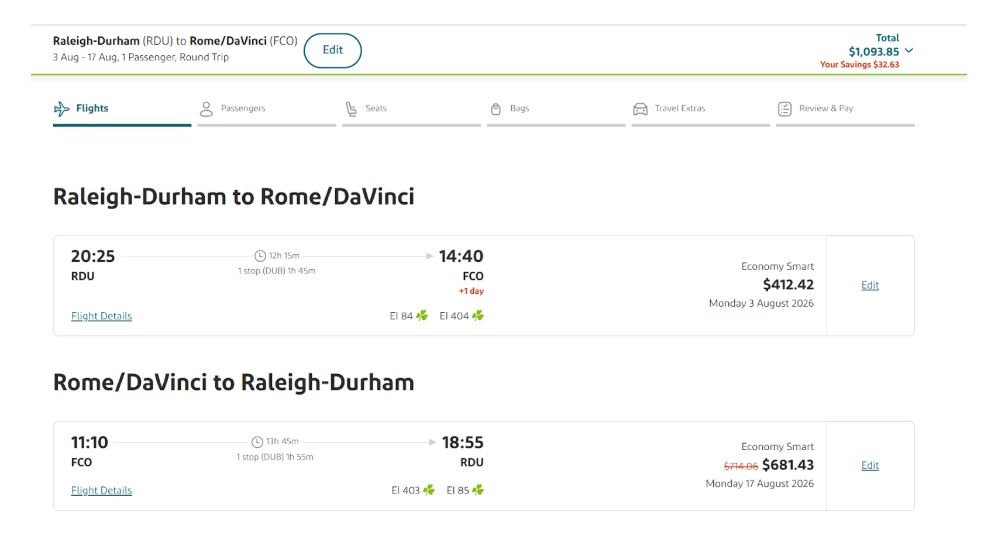
If I searched for a summer trip to Italy the way I used to, I’d pop in RDU – FCO in Google Flights. So I did that. Here’s what I found:
Economy with Cash
The cheapest option I found was on Aer Lingus, which came in around $1,091 roundtrip per person. It is the mid-tier economy option which allows changes for a fee and includes a layover in Dublin both ways.
Total
- RDU → Dublin → Rome
- Rome → Dublin → RDU
- Price: about $1,093 per person
- Economy seats, changeable with a fee
But when I searched the same trip using points, the options started looking very different. Here’s what the exact same trip looked like depending on how I searched.
Economy with points (two one-way flights)
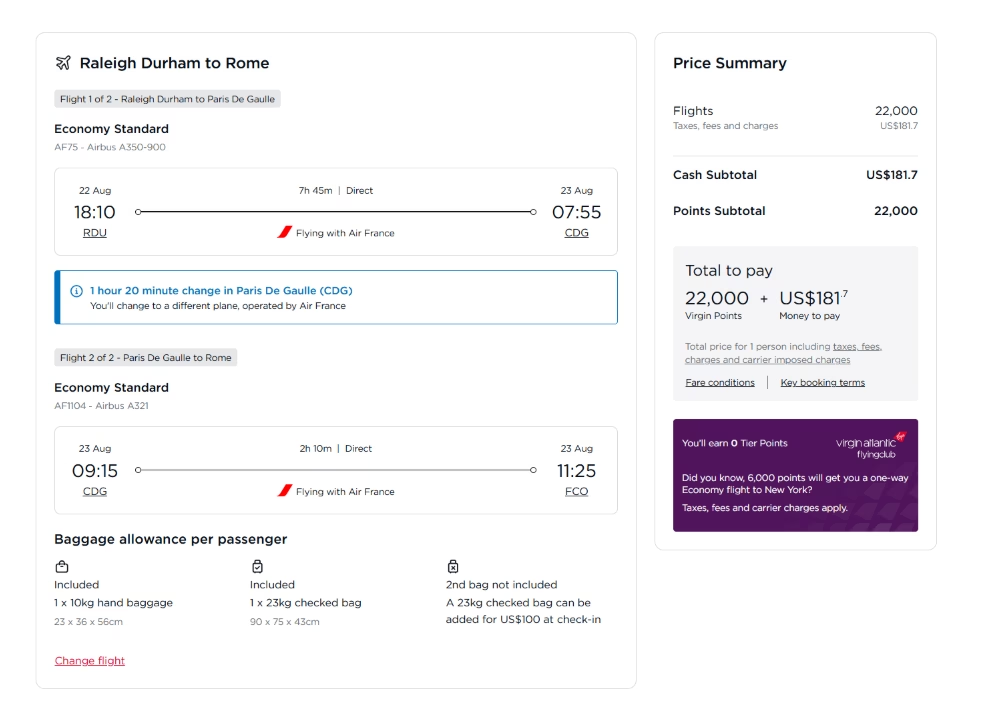
Flight 1: RDU → Paris → Rome
• 22,000 points + $181
• booked through Virgin Atlantic Flying Club
• flight operated by Air France
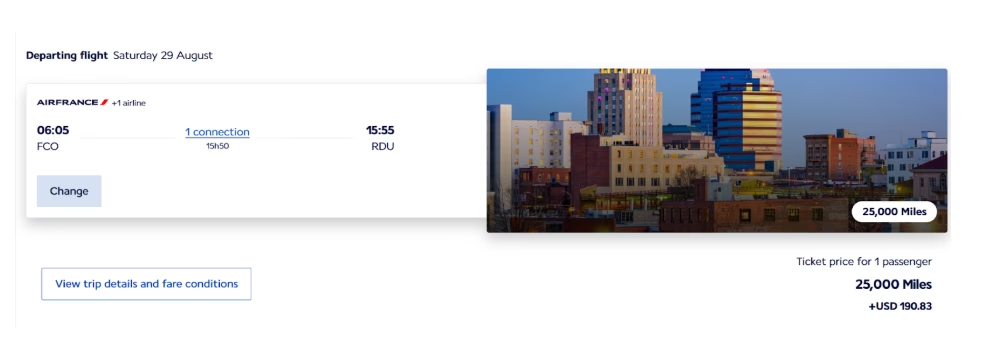
Flight 2: Rome → Paris → RDU
• 25,000 points + $190
• booked through Air France Flying Blue
Total
• 47,000 points
• $371 in taxes and fees
Still economy seats, but a significantly lower cost.
(When booking flights with points you still pay taxes and fees. Depending on the airline, these can be very small or a few hundred dollars.)
Another Option: Business class with points
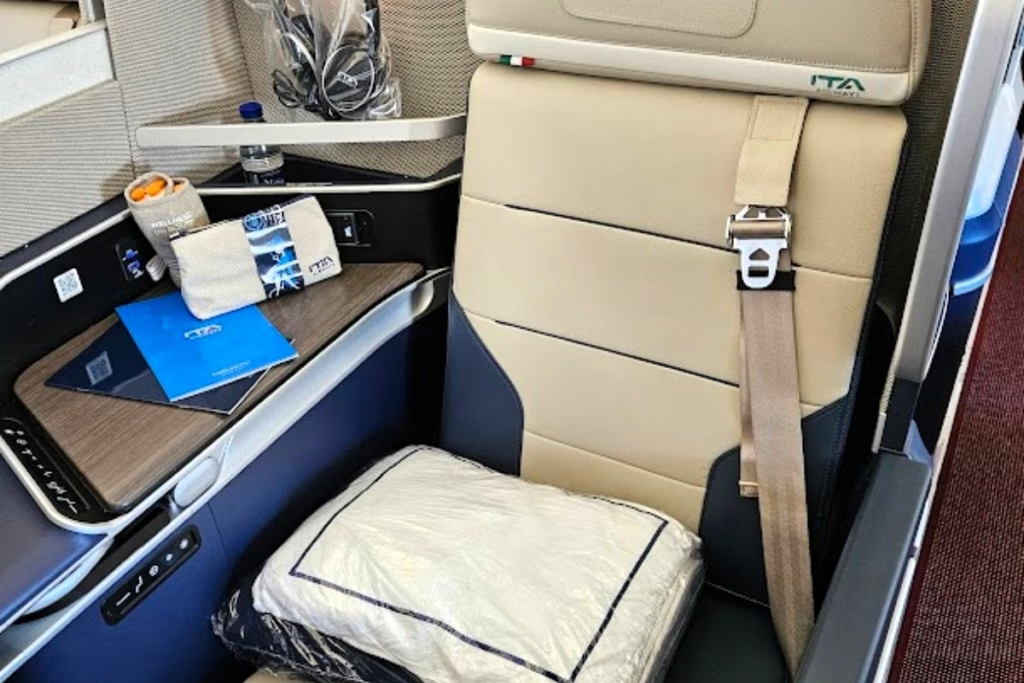
When I searched business class flights home from Rome, there weren’t good options near our dates.
But when I checked Milan (MXP) instead, much better flights appeared.
That’s an easy adjustment in Italy. A high-speed train connects Rome and Milan in about three hours, passing through Florence and Bologna along the way.
That flexibility opened up this option:
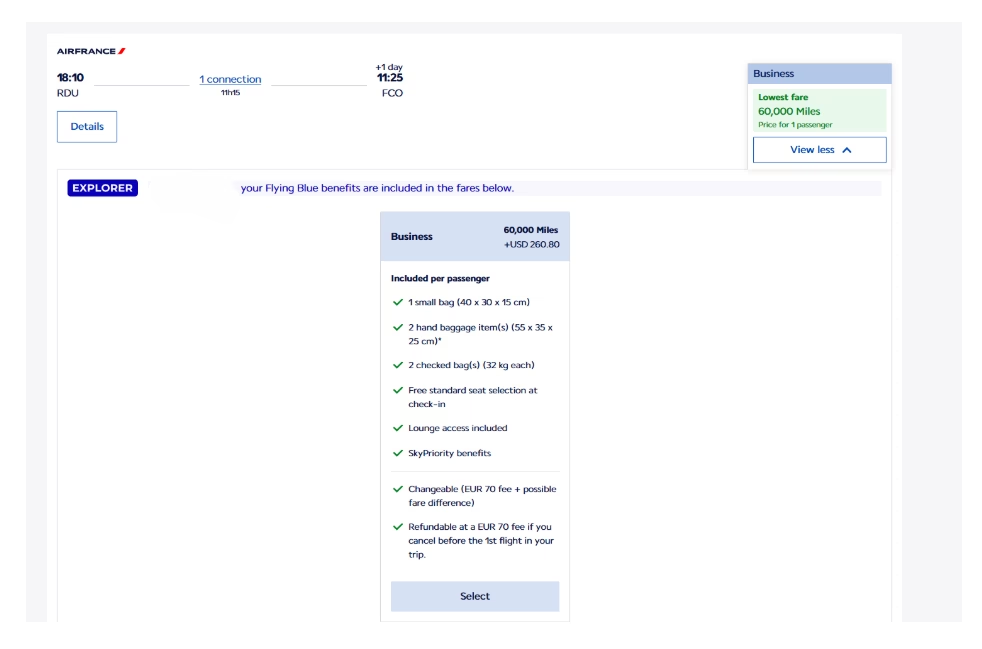
Departing: RDU → Paris → Rome (Air France business)
60,000 points + $260
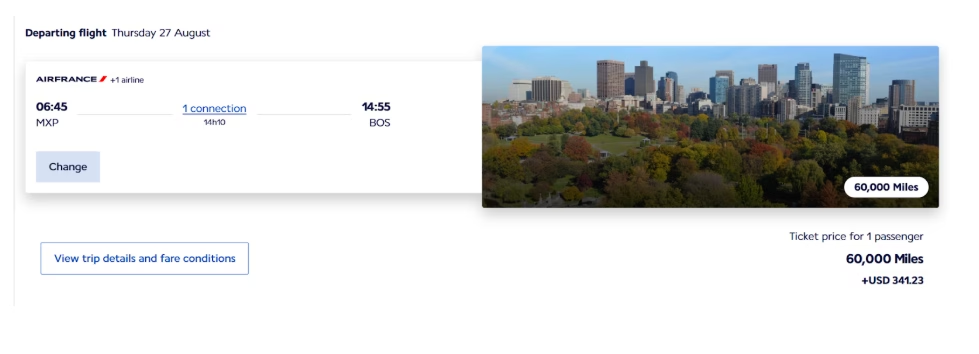
Returning: Milan → Paris → Boston (Air France business)
60,000 points + $341
Returning: Boston → RDU positioning flight
8,000 points + $12
Total
- 128,000 points
- about $615 in taxes and fees
All of the long flights across the Atlantic are lie-flat business class seats. While points used are still part of the equation, the total out-of-pocket cost for a roundtrip lie-flat business class flight is about $615 in taxes and fees.
This is where the value of points really starts to make sense.
At first that extra flight home from Boston looked like a complication. In reality it was just a short positioning flight. About two hours and 8,000 points.
A small trade-off for a lie-flat seat across the Atlantic. That was one of the moments when the system really started to make sense.
One Step Further: Emirates business class
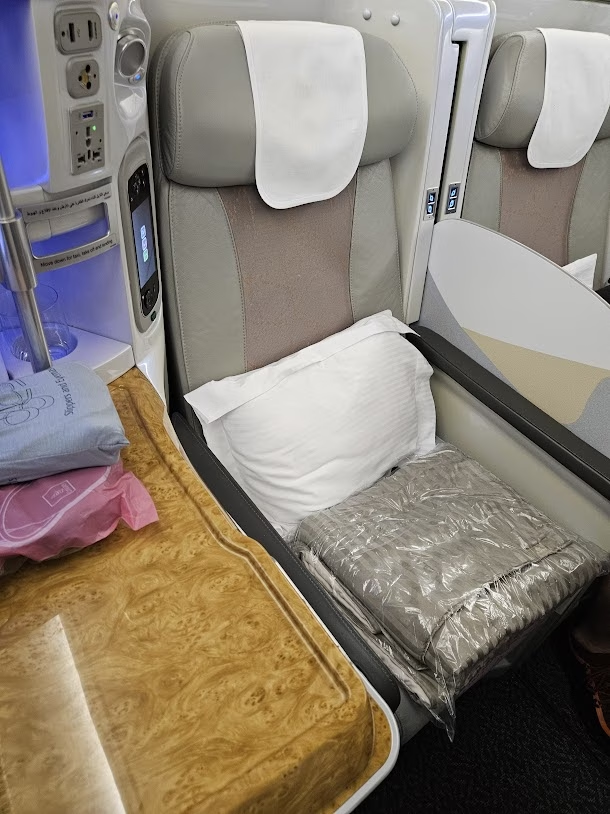
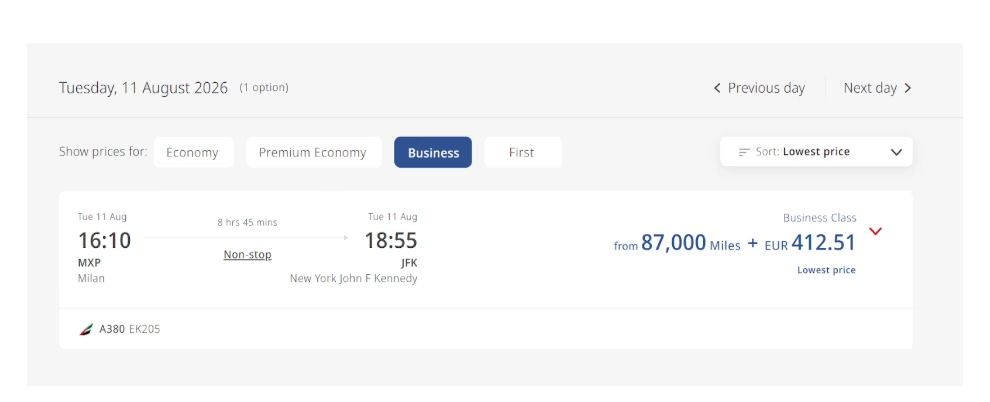
By being flexible to other airports including MXP (Milan), this Emirates business class flight is also available. This is the same airline product many travelers pay several thousand dollars for, and I can attest, it is amazing.
Return Flight: MXP → JFK (Emirates Business Class)
87,000 points + $477 (about 412 Euros)
Secret 2: Flexible points unlock the most options
This approach works best with flexible credit card rewards points.
Flexible points can transfer to multiple airline loyalty programs, which means you aren’t limited to a single airline when searching for flights.
Some of the most common flexible points currencies include:
• Chase Ultimate Rewards
• American Express Membership Rewards
• Capital One Miles
• Citi ThankYou Points
• Bilt Rewards
These points can transfer to airline programs like Air France/KLM Flying Blue or Virgin Atlantic Flying Club, which often have good redemption rates for flights to Europe.
The key takeaway is flexibility. When your points can move between multiple airline programs, the number of flights you can search increases dramatically.
Most travelers earn the majority of their points through normal spending on things like groceries and gas, which is exactly How Smart Travelers Turn Everyday Spending Into Real Trips.
Secret 3: The airline you book isn’t always the airline you fly
This surprises a lot of beginners. The airline you book through isn’t always the airline operating the flight.
Airlines partner with each other through alliances and individual agreements. Because of those partnerships, one airline’s loyalty program can often book seats on another airline (and it may be a different price).
Want an example? Let’s look at the RDU → Paris → Rome flight used in my example above. This flight is flown by Air France on an Air France plane.
If booked on Air France, it cost 25,000 Flying Blue Miles plus $122.50:
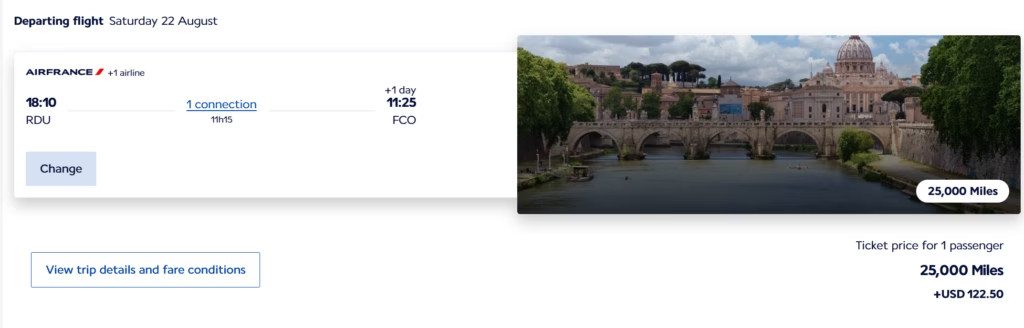
If booked on Virgin Atlantic, the same exact flight is 22,000 Virgin Points plus $181.70.
Once you understand partner airline bookings, the number of possible routes expands quickly.
Secret 4: One-way flights unlock better itineraries
Many travelers assume flights need to be booked roundtrip. Sometimes that’s cheaper for cash tickets, but award travel works differently.
Points travelers often book one-way flights instead of one roundtrip ticket.
That small change opens up a lot of possibilities.
You can:
• fly into one city and leave from another
• use different airlines each direction
• choose the best flight instead of forcing one itinerary
It also makes trips more interesting.
If you have to fly in and out of the same city, you usually end up looping back at the end of your trip. When you book one-way flights, you can move through a region naturally and see more places along the way.
Secret 5: Not every seat can be booked with points
Cash flights are simple. If a seat is available, you can usually buy it.
Award flights work differently. Airlines release only a limited number of seats that can be booked with points. These are called award seats.
Sometimes those seats appear months in advance. Sometimes they show up closer to departure. Airlines release far more economy award seats than premium cabins, so if you’re looking for a specific seat, consider this before you start searching.
This is why experienced points travelers search multiple routes and stay flexible with their plans.
Secret 6: Some routes cost far fewer points than others
Cash flights usually change price based on demand.
Points flights don’t always work that way.
Some airline programs price flights using fixed rates or distance-based pricing. That means certain routes can cost a predictable number of points even when the cash price is extremely high.
These opportunities are often called sweet spots.
A few well-known examples include:
• Emirates fifth-freedom flights (my favorite)
Milan ↔ New York or Athens ↔ Newark
~87,000 points in business class one way
• United Polaris business class to Europe
often 80k–100k points one-way
• Virgin Atlantic bookings on Air France or KLM
sometimes ~50k–60k points for business class one-way
• ANA business class to Japan (round trip requirement to book)
often around 90k points roundtrip through partners
These kinds of routes are one reason experienced travelers often start by looking for the best long flight first.
This is the way I planned my Italy trip in 2024 as well. See the full breakdown of flights I booked, hotels I stayed in, and how much everything cost (in cash and points).
→ Italy on Points and Miles: A 16-Day Itinerary of Savings and Splurges
Secret 7: Your best flight might not leave from your home airport
This is especially true if you live near a smaller airport. For example, my home airport is RDU. We do have some great international routes, but many long-haul flights still leave from larger hub airports like New York, Boston, or Atlanta.
That’s where positioning flights come in.
A positioning flight is simply a short flight that gets you to the airport where your main trip begins.
For example, someone flying from Raleigh might take a quick flight to New York before catching a long-haul flight to Europe.
These flights are usually inexpensive in cash or points, and they often unlock routes that wouldn’t otherwise appear in a normal search.
It might feel like an extra step at first, but it’s one of the most common ways points travelers open up better routes.
Secret 8: Real flexibility means more than changing your dates
Many travelers think they’re flexible if they can move their trip by a few days.
But award travel flexibility usually goes further than that.
Experienced points travelers stay flexible with:
• airports
• airlines
• routes
• the order of their trip
Sometimes a small change reveals dramatically better flights.
For example, flying into one city and leaving from another might unlock availability that never appeared in a standard round-trip search.
Secret 9: You don’t always need airline status to get the perks
Many travelers assume airline status is the only way to get perks like priority boarding, free checked bags, or airport lounge access.
But a lot of those benefits can come from credit cards or premium cabin tickets instead.
For example:
• some airline credit cards include priority boarding and free checked bags
• long-haul business class tickets usually include airport lounge access automatically
• premium travel cards can include airport lounge memberships and companion passes
That means you can still enjoy many of the same travel perks without needing to stay loyal to one airline.
→ Some premium travel cards include benefits that easily offset their annual fee, which I break down in my guide to premium credit cards that pay for themselves.
→ Some airline cards even include companion passes, like the one explained in my post on how the Delta companion certificate works.
Packing It Up
Learning how to book flights with points isn’t just about redeeming rewards. It’s really about realizing you have far more control over your flights than most search engines suggest.
Once you start thinking about routes, airlines, and availability differently, you begin to see options that didn’t show up before.
Sometimes that means cheaper economy flights and more trips each year. Sometimes it means a lie-flat seat to Europe that would normally cost thousands of dollars.
Either way, the biggest shift is realizing that flight searches don’t have to be limited to the first results you see.
And once you start experimenting with these strategies, travel starts to open up in ways that feel surprisingly accessible.
Your Next Read
How Smart Travelers Turn Everyday Spending Into Real Trips
How to Use Credit Card Points for Travel: A Beginner’s Guide to Flexible Rewards
Stack Smart: No-Fee Cards + Portals = Transferable Travel Points